Active emergency right now?
Storm & Monsoon Roof Damage in Yuma, AZ
If water is actively entering your home right now, call (928) 597-9287 first — the sequence below is what to do while you wait for help and in the hours after.
- Stay off the roof during active wind, rain, or lightning — no repair is worth a fall or electrocution risk.
- Contain the water — buckets or towels under active leaks, and move valuables away from the affected area.
- Photograph everything from the ground — the damage, standing water, and any debris — before anything gets cleaned up or moved.
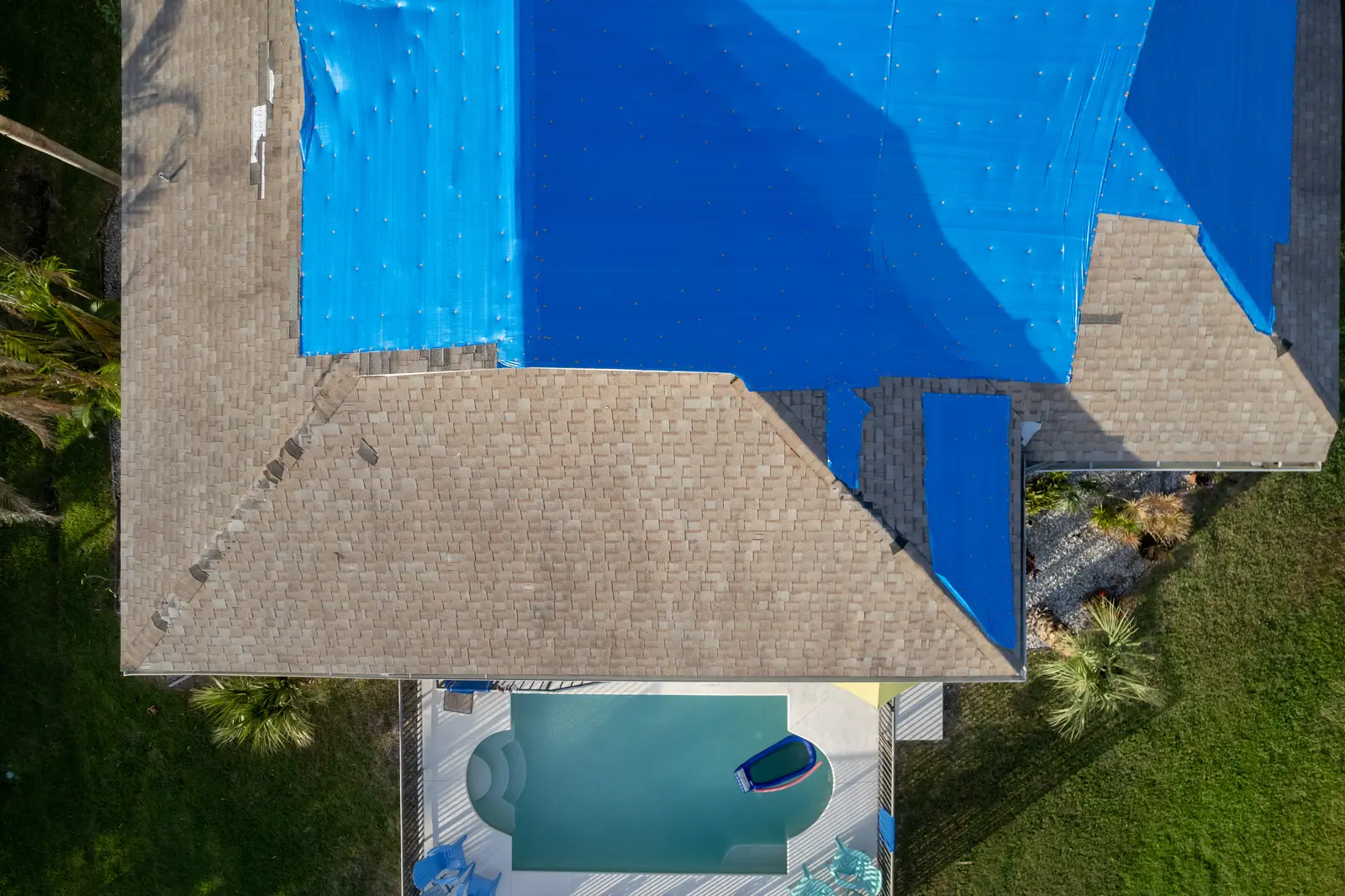
- Arrange emergency tarping once it's safe — a temporary tarp prevents the damage from getting worse while repairs are scheduled.
- Call your insurer to start the claim, and a local roofing company for an assessment and repair quote.
Why monsoon damage is different from ordinary wear
Yuma's monsoon season brings intense, short-duration wind and occasional hail — different from the slow granule loss and heat-driven aging that most roofing content focuses on. Wind can lift shingles or tiles at the edges and ridges without necessarily tearing them off outright, which means damage isn't always obvious from the ground. Flat and low-slope roofs common on some Yuma homes are also vulnerable to ponding if drains or scuppers get clogged with monsoon debris. A roof that looked fine before a storm can have real, fundable damage after one — which is exactly the situation this guide, and no other Yuma roofing site's published content, currently addresses.
What actually counts as storm damage
- Wind-lifted or missing shingles/tiles — especially along ridges, edges, and around vents, where wind uplift concentrates.
- Hail bruising or cracking — less common in Yuma than in other parts of Arizona, but not impossible during a strong monsoon cell.
- Ponding on flat/low-slope roofs — water sitting for more than 48 hours after a storm signals a drainage problem, not just normal runoff.
- Debris impact — branches or wind-blown debris can puncture or crack roofing material even without a direct hail hit.
- Flashing separation — high wind can work flashing loose around chimneys, vents, and roof-wall intersections, creating a leak path that isn't visible until the next rain.
What storm-related roof repairs actually cost in Yuma
Typical figure based on Homeyou’s sample of 522 real Yuma roof-repair quotes collected in 2026 (YUM-010). Severity bands are a directional Arizona-wide benchmark (arizonaroofers.com) layered on top — treat the typical figure as the better anchor for an average call, and the bands as a guide to where a specific problem tends to land. Storm-caused repairs are priced the same way as any other roof repair — the cause doesn't change the cost, only whether insurance offsets it:
| Severity | Estimated cost range |
|---|---|
| Minor (flashing, ridge cap, a few shingles) | $200–$750 |
| Moderate (localized leak, small area) | $700–$1,500 |
| Major (valley leak, decking damage) | $1,500–$8,000 |
If a storm caused enough damage to warrant a full section or whole-roof replacement rather than a repair, see the Roof Replacement Cost guide — asphalt shingle replacement runs $4–$7 per sq ft. For a deeper breakdown of exactly what an adjuster inspects and what a typical approved repair costs once a claim is processed, see What Insurance Adjusters Look For After a Yuma Storm.
How a homeowners insurance claim actually works
Most standard Arizona homeowners policies cover roof damage from a sudden, specific event — wind and hail both qualify. What they typically don't cover is damage from gradual wear, age, or lack of maintenance, which is why documentation of the storm itself (date, local weather reports, photos of the damage) matters so much to a claim's outcome. A typical process looks like:
- File the claim with your insurer as soon as it's safe, ideally with photos already taken.
- An adjuster inspects the roof — often within days to a couple weeks depending on how many claims the storm generated regionally.
- The adjuster documents cause and extent of damage — this is where a roofing company's own written assessment, done independently, can support or challenge the adjuster's findings if they disagree.
- The insurer issues a settlement — often as Actual Cash Value (ACV, depreciated) first, with the remainder (Replacement Cost Value) paid after repairs are completed and documented, depending on your policy type.
- Repairs proceed once funds and a contractor are in place.
On timing: Arizona law gives you up to two years from the date of damage to file a lawsuit over property damage (A.R.S. § 12-542) — but that is a legal backstop, not your actual insurance policy's claim-filing deadline, which is typically much shorter (often a year or less, and varies by carrier). Don't wait — file with your insurer as soon as it's safe to do so, and check your specific policy's stated deadline rather than assuming you have two years.
A word of caution: storm-chaser contractors
After any major storm, it's common for out-of-area crews to canvass affected neighborhoods offering fast repairs. Some are legitimate; some are not licensed to work in Arizona at all, and disappear after collecting a deposit. Before signing anything with a contractor you haven't vetted, verify their Arizona ROC license directly — see the Yuma Roofing FAQ for exactly how. This matters more, not less, in the days right after a storm, when the pressure to move fast is highest.
Once the immediate situation is handled
If the damage turns out to be a full loss, see the Roof Replacement Cost guide for what a new roof runs by material. If it's a contained, repairable issue, see the Roof Repair Cost guide, or the Roof Leak Diagnostic Guide if you're not yet sure where the leak is coming from. Either way, get a contractor's written assessment before your insurance settlement is finalized — it's the single most useful document you can have if the adjuster's initial scope looks incomplete. And before next monsoon season, the Monsoon Season Roof Prep Checklist covers what to do ahead of time to reduce the odds of a repeat.
This page describes general homeowners-insurance and roofing-industry practices for educational purposes and is not insurance, legal, or public-adjuster advice — confirm specifics with your insurer and policy documents. We work with roofing companies who report holding active ROC licensing and insurance — always verify directly at azroc.my.site.com before hiring.
Frequently Asked Questions
Does homeowners insurance cover monsoon roof damage in Arizona?
Often, yes — most standard homeowners policies cover roof damage caused by a specific, sudden event like wind or hail, which is exactly what a monsoon storm produces. Damage from gradual wear, poor maintenance, or an already-failing roof is typically excluded, which is why documenting the storm itself matters so much.
How long do I have to file a roof insurance claim after a storm in Arizona?
Arizona law sets a two-year deadline from the date of damage for filing a lawsuit over property damage (A.R.S. § 12-542) — but that is a legal deadline for a lawsuit, not your insurance policy's own claim-filing deadline, which is almost always much shorter, often a year or less. Check your specific policy and file as soon as it's safe to do so; don't rely on the two-year figure as your actual filing window.
What should I do immediately after monsoon roof damage?
First, make sure everyone is safe and stay off the roof during active weather. Once it's safe, photograph the damage from the ground, place buckets under active leaks, and arrange emergency tarping if water is entering the home — then contact your insurer and a local roofing company. See the emergency section above for the full sequence.
Will my roof insurance rates go up if I file a monsoon damage claim?
A single weather-related claim (as opposed to a claim caused by neglect or repeated issues) is generally treated more favorably by insurers than other claim types, but rate impact varies by carrier and your claims history. This is a question worth asking your agent directly before filing, not something we can answer generically here.
Get Connected With a Storm Damage Specialist
Tell us what's going on and we'll connect you with a roofing company serving your area.